



.jpg)


















Growing Influence of the Egyptian Muslim Brotherhood in Chad: A Sudden but Revealing Phenomenon
The influence of the Egyptian Muslim Brotherhood appears to have emerged in Chad rather abruptly, yet for those familiar with the history of this transnational movement, this development is far from surprising. For decades, the ideological, charitable, and symbolic networks of the Muslim Brotherhood have circulated across the Sahel, North Africa, and the Horn of Africa, taking advantage of institutional fragilities and loosely regulated religious spaces.
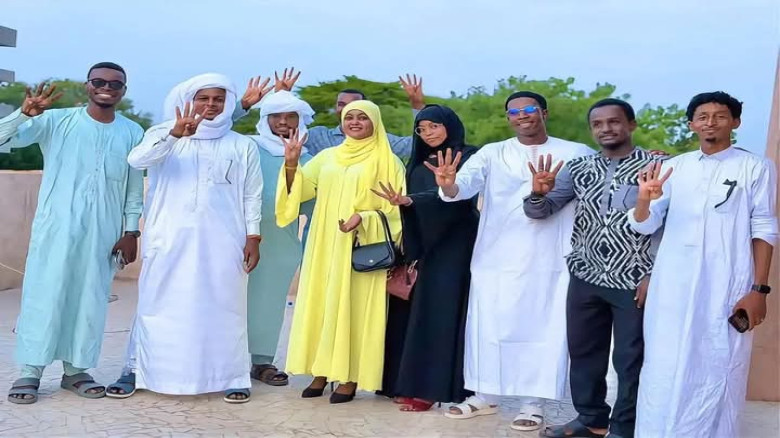
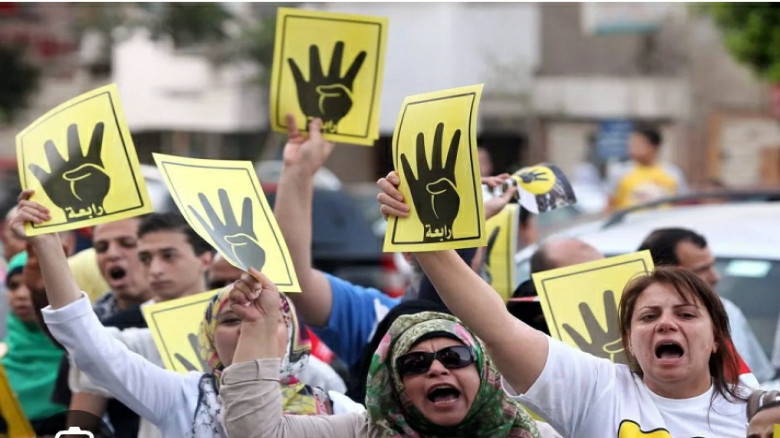
A recent event has reignited concerns: the young Chadian TikTok influencer Aza Acyl, widely followed on social media, announced her engagement to a relatively unknown Chadian businessman. Shortly afterward, she declared her candidacy in the partial legislative elections, launching her campaign with a communication strategy that immediately sparked controversy. The issue stems from the logo she chose, a symbol historically associated with Egyptian Islamists, particularly the Muslim Brotherhood. This logo, which first appeared in the 1990s and resurfaced during the 2012 Egyptian revolution, was publicly endorsed by former Egyptian president Mohamed Morsi. It is widely recognized for its meaning, “four on your face,” a gesture that became emblematic within pro‑Brotherhood circles.
In these partial elections, Aza Ahmat Acyl is running as candidate number 04 for the Hadjer‑Lamis region. Her recent marriage to a businessman named Alhadj Mahamat has fueled speculation about the networks of influence that may surround her candidacy. It is legitimate to question whether the young candidate fully understands the historical and ideological weight of the symbol she is using. In practice, this logo is associated with Brotherhood‑linked networks in Egypt, Turkey, Sudan, Libya, and now its appearance in Chad raises understandable concerns.
Following the ousting of President Mohamed Morsi, the government of Abdel Fattah al‑Sisi launched a sweeping crackdown on the Muslim Brotherhood. Many of its members fled to Turkey, Libya, Niger, and other countries in the region. In this context, some observers believe that a transnational Brotherhood network may be operating behind Aza Acyl’s political initiative — a hypothesis that remains unconfirmed but raises questions, especially given her use of a symbol associated with an organization that the United States recently designated as a terrorist organization.
(Reminder: certain branches or affiliates of the Muslim Brotherhood have been designated as extremist by several governments and are responsible for severe human rights violations.)
The Chadian government, due to limited expertise in navigating such transnational dynamics, must exercise caution. The Brotherhood’s network is vast, structured, and difficult to contain. The movement has already penetrated Chad through charitable organizations, training centers, and Quranic schools commonly known as “Mabrouka.” According to several analyses, these Mabrouka institutions serve both as religious education centers and, in some cases, as indoctrination hubs that may foster forms of radicalism. The situation is alarming: nearly every Arab country appears to have its own Mabrouka established in Chad.
If no measures are taken to regulate these influences, Chad could eventually be perceived as a favorable ground for radical political Islam, a trajectory that does not reflect the country’s history nor the aspirations of the majority of Chadians. Institutional vigilance, regulation of religious structures, and political transparency are now essential to prevent an ideological drift that could undermine national cohesion.
By: La Rédaction Charilogone
© Charilogone – All Rights Reserved


Leave A Comment