
.jpg)

























Political Analysis: Burhan Falls into the Egyptian‑Saudi Trap
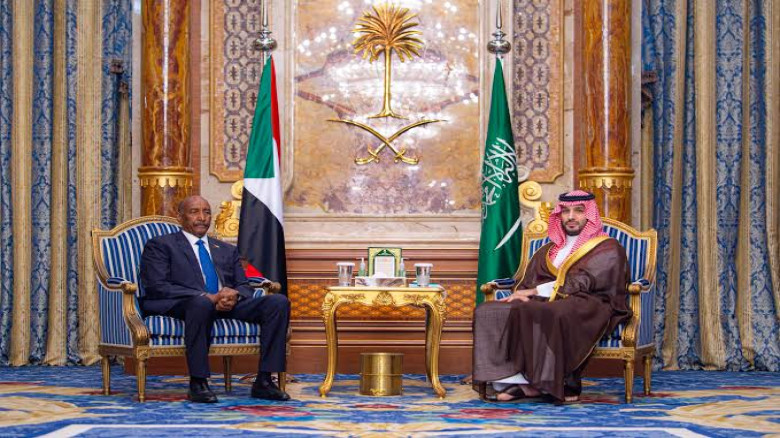
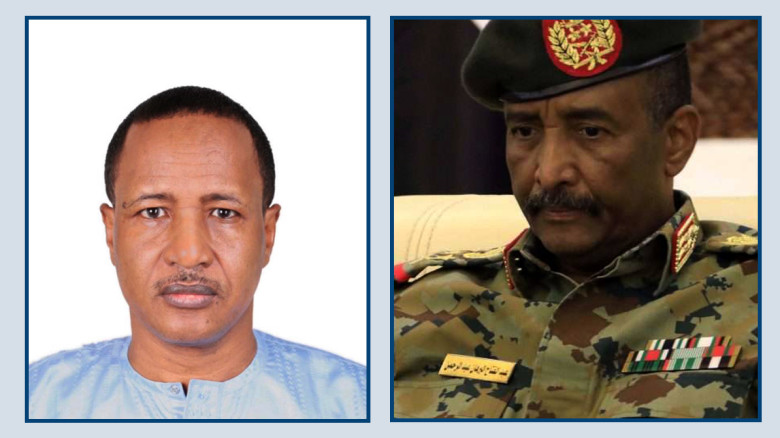
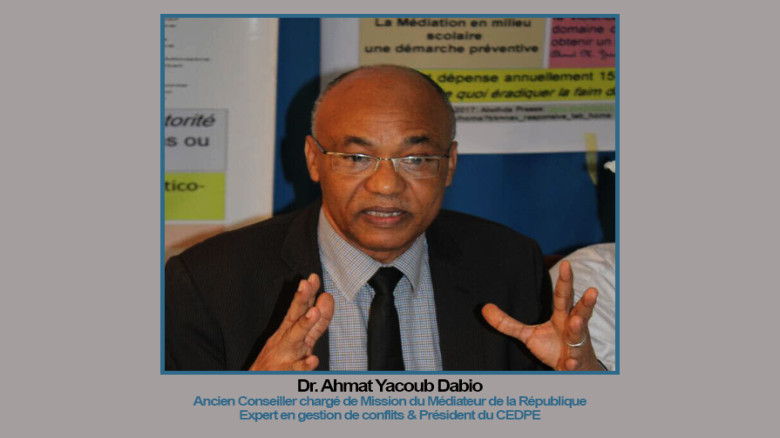
Image: Mahamat Ali Kilani – Director of the African Sahel Observatory (left) and General Abdel Fattah al-Burhan, head of the Sudanese transition (right).By: Mahamat Ali Kilani – Director of the African Sahel Observatory
The recent evolution of Sudan’s official discourse reveals a worrying escalation in Khartoum’s regional posture. The statement by the Sudanese Minister of Foreign Affairs declaring that “engagement with Ethiopia will be unlimited” has sparked strong reactions, with some observers interpreting it as an indirect declaration of war. Many question the true scope of these remarks: are they the result of a calculated position, or a diplomatic outburst with potentially serious consequences for a country already weakened by three years of internal conflict?
Analysts argue that linking the Sudanese crisis to an alleged Ethiopian‑Emirati aggression diverts attention from the internal causes of the conflict. They recall the rhetoric of Omar al‑Bashir’s regime during the South Sudan war, when he accused various countries — including Egypt, Chad, Saudi Arabia, the United States, Israel, Uganda, Ethiopia, and Eritrea — of interference.
According to our analysis, General Abdel Fattah al‑Burhan is now relying on Egyptian‑Saudi support to open a military front against Ethiopia. But a fundamental question remains: does Sudan truly have the capacity to open a new front in its current condition?
We emphasize that the Sudanese army cannot fight on two fronts without internal cohesion and national unity. Western Sudan is moving toward a secessionist dynamic, and the Blue Nile region — along with others — could follow. The army has lost the human capital that once enabled it to withstand the wars in the South and in Darfur.
We believe that a potential military action against Ethiopia, justified by drone strikes on Khartoum airport, is no longer a sufficient argument for regional states committed to Sudan’s unity, for whom its partition remains a red line.
We also note that Burhan does not command a unified army. He has aligned himself with regional and ideological militias pursuing disparate, narrow, and often tribal objectives. These forces do not possess the offensive temperament required to confront a state like Ethiopia. We also rule out any participation by Malik Agar or by leaders of the movements that signed the Juba Peace Agreement in a war against Ethiopia.
In terms of alliances, it appears unlikely that Egypt — burdened by debt and economic crises — would allow itself to become entangled in an “African quagmire.” Moreover, the position of Eritrean President Isaias Afwerki in a Sudan‑Ethiopia conflict would remain ambivalent, as his current ambitions are focused on eastern Sudan rather than on a confrontation with Ethiopia.
We further consider that Burhan’s main weakness lies in the international legitimacy deficit of his regime and in his ties to the Muslim Brotherhood, terrorism, and racism — factors that make any war with Ethiopia even more complex.
Although Burhan holds the “Tigray card,” we observe that Ethiopia maintains its neutrality and has not yet played all its options. We warn General Burhan that his continued support for Tigray could prompt Addis Ababa to retaliate by backing the Rapid Support Forces.
Finally, we assert that the war in Sudan was fomented by the Muslim Brotherhood, who are its primary beneficiaries, while the population pays the price. We believe that the solution lies in peace — both internally and externally — and that Burhan must take stock of three years of war.


Leave A Comment