






















Israel in a Defensive Posture: Analysis of Netanyahu’s Latest Speech
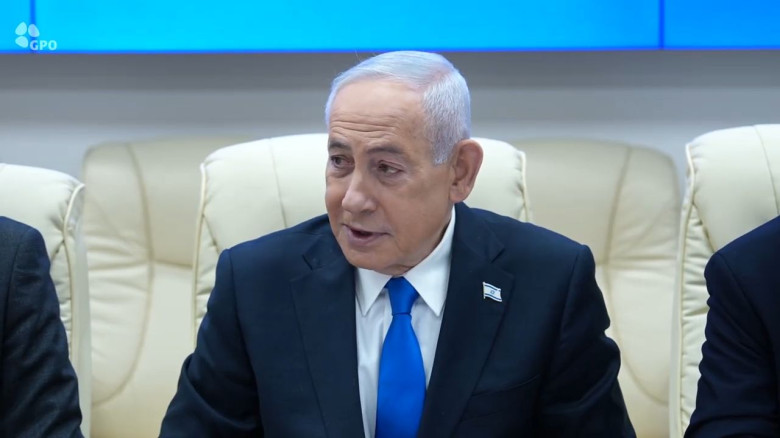
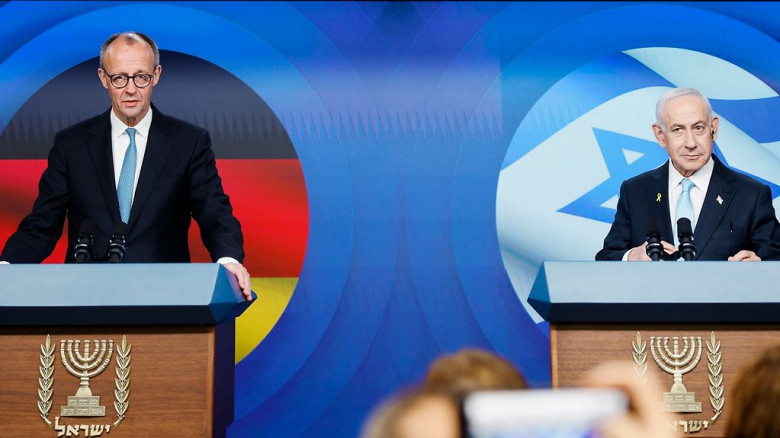
Image: Israeli Prime Minister Benjamin NetanyahuBy: Analysis — La Rédaction Charilogone
In a moment when regional tensions are reshaping the balance of power in the Middle East, the statement delivered by Israeli Prime Minister Benjamin Netanyahu resonates as a blend of military firmness, strategic warning, and historical memory. The tone is martial, the rhetoric deliberate, and the objective unmistakable: to present an Israel in action, closely coordinated with the United States and determined to contain Iran and its allies.
The speech opens like a field report, almost immersive in its detail. Netanyahu recounts his visit to the security zone in Lebanon, in direct contact with soldiers and reservists. He describes a military on the move, a redrawn border, enemy positions “flattened,” and a determination that, in his view, should reassure residents of northern Israel. In the spirit of Charilogone, one could say the Prime Minister seeks to embody presence — to appear as a leader at the front, a direct witness to the military effort and to the transformation of the security landscape.
The second pillar of his address rests on the relationship with Washington. Netanyahu emphasizes a “never‑before‑seen” level of coordination, almost fusion‑like, with the U.S. administration. He presents the collapse of negotiations with Iran as an American decision triggered by an Iranian violation, and the naval blockade as a legitimate response. Through this narrative, he sketches the image of an Israel backed by the world’s leading power — a strategic alliance he describes as historic and essential to the country’s security.
The final part of the speech takes on a more symbolic dimension. Netanyahu invokes the memory of the Holocaust, the survivors, the extermination camps, and contrasts two images: that of a Jewish people “hunted” in the past, and that of a modern State of Israel now “hunting” its oppressors. This narrative construction aims to anchor current military action within a historical continuum — one of survival, resistance, and “Never Again.” In the Charilogone style, one might say Netanyahu seeks to bind the present to the tragic weight of the past, turning each military operation into an act of remembrance, each strategic decision into a bulwark against erasure.
The speech is built like an architecture of certainties: a clearly designated enemy, an army portrayed as invincible, an American alliance depicted as unbreakable, and historical memory mobilized as moral justification. Yet behind this display of firmness, the analysis reveals a more complex landscape: an unstable Lebanon, an unpredictable Iran, and a region where every movement can redraw the strategic map.
Netanyahu’s declaration thus appears as a text of war, strategy, and memory. It seeks to reassure, galvanize, and justify. It fits into a moment when Israel aims to show that it controls its destiny — no longer the victim of history, but an actor striking before being struck. A speech that, as often in the Middle East, speaks as much through what it states as through what it leaves unsaid.
— La Rédaction Charilogone

.jpg)


.gif)


Leave A Comment