



































Major Crisis in 2026: Washington and Tel Aviv Strike, Tehran Strikes Back
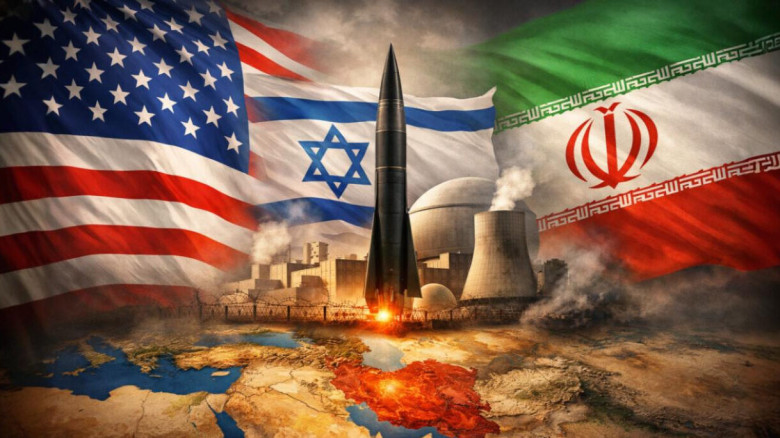
By: La Rédaction Charilogone.At three o’clock in the morning on Saturday, February 28, 2026, the United States and Israel launched a series of coordinated strikes against the Islamic Republic of Iran. Washington argued that the negotiations conducted over the previous weeks with Tehran were nothing more than maneuvers designed to buy time and continue uranium enrichment. Convinced that Iran was dangerously approaching the nuclear threshold, U.S. authorities concluded that diplomacy had become ineffective, clearing the way for a joint military operation with Israel.
During the first waves of strikes, a missile hit the Supreme Leader’s headquarters, where an emergency meeting with Iran’s highest‑ranking military officials was underway. The explosion killed Ayatollah Khamenei along with several of his top commanders, triggering an unprecedented shock at the highest levels of the Iranian state. In the hours that followed, U.S. and Israeli operations intensified, targeting Iranian naval bases near the Strait of Hormuz. About ten Iranian warships preparing to close the strait in retaliation were destroyed before they could act.
The threat to the Strait of Hormuz—an essential passageway for global oil shipments—was considered a red line by Washington. Neutralizing Iran’s naval capabilities in this area was presented as necessary to preserve global energy security and prevent a major disruption in international supply chains.
In response to the strikes, Iran launched a series of direct retaliatory attacks against American and Israeli interests. Several U.S. military bases located in Saudi Arabia, Qatar, the United Arab Emirates, Jordan, and Kuwait were targeted by Iranian missiles. According to early U.S. assessments, these attacks caused four deaths and five injuries among personnel stationed in the Gulf. At the same time, Iran fired a barrage of ballistic missiles and cluster munitions toward Israel. Iranian media claimed the strikes targeted military sites around Tel Aviv, Haifa, Beersheba, and the Golan region, but several projectiles landed in civilian areas, causing casualties and significant material damage. Israeli authorities confirmed multiple deaths, without immediately providing a precise number.
Amid this escalation, the U.S. President declared that “the United States will not remain passive in the face of an imminent nuclear threat” and that Washington “ will act as necessary to protect its forces, its allies, and global stability.” He added that Iran “bears full responsibility for the current spiral,” having, in his words, “violated its commitments and deceived the international community.”
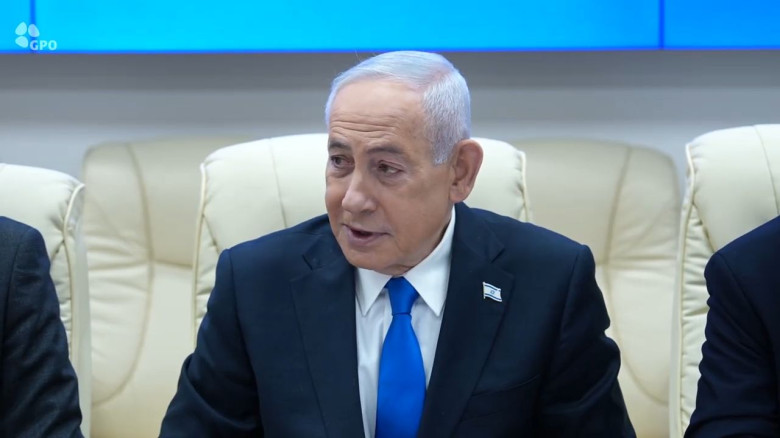
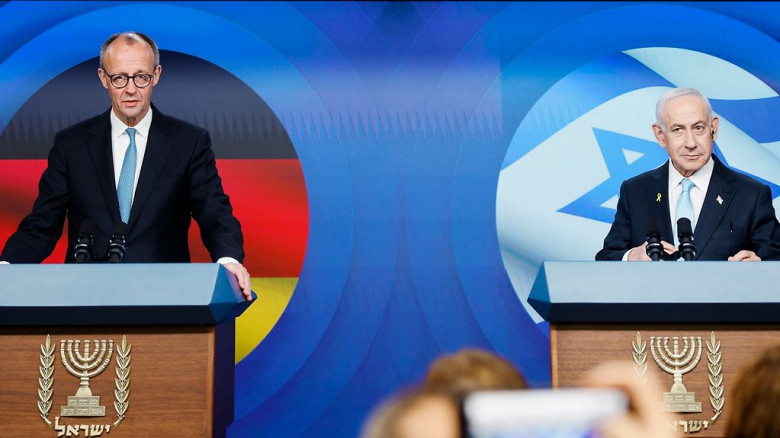
The Israeli Prime Minister praised the military coordination with Washington, stating that “the State of Israel will never allow a hostile regime to acquire nuclear weapons.” He added that the Iranian missile strikes on civilian areas “reveal the true nature of the Tehran regime” and that his government “will respond with all necessary firmness to ensure the security of the Israeli people.”
The simultaneous escalation triggered an immediate international reaction. The UN Security Council convened an emergency meeting, calling for an immediate halt to hostilities and a return to diplomacy. The European Union expressed deep concern, stressing that stability in the Middle East is essential to global security. Gulf countries, directly exposed to Iranian strikes, denounced a threat to regional security and reinforced their air‑defense systems. Russia and China urged restraint while criticizing the use of force by Washington and Tel Aviv, arguing that the initial strikes risked fueling an uncontrollable spiral.
Economically, the consequences were immediate. The Strait of Hormuz was placed under high tension after the destruction of several Iranian vessels, raising fears of a disruption in oil flows to Europe, Asia, and the United States. Markets reacted with a sharp rise in oil prices, jumping from $60 to $80 per barrel, while shipping companies began rerouting their vessels, increasing transport costs and extending delivery times. International stock markets experienced strong volatility, particularly in the energy, transportation, and defense sectors. Analysts warned that if the conflict continued, it could trigger widespread price increases, weigh on global growth, and weaken economies dependent on oil imports.
The Strait of Hormuz


Leave A Comment