.jpg)





















Why Dialogue Is No Longer a Solution to the Chadian Crisis
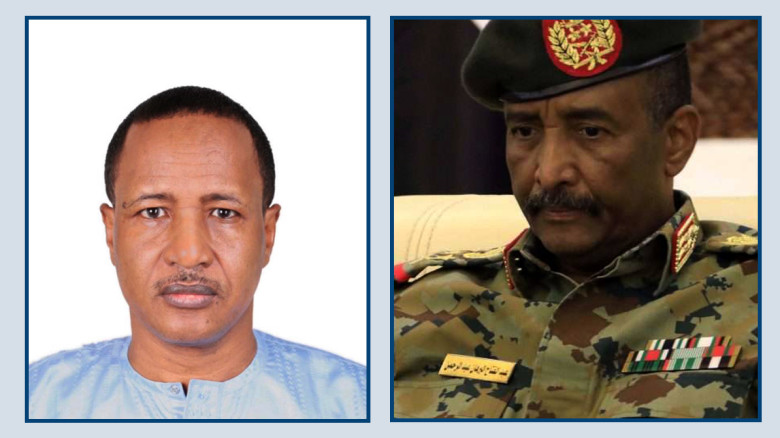
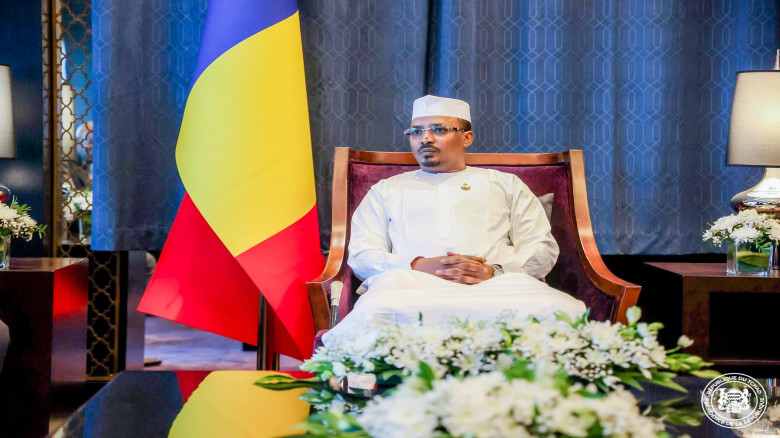
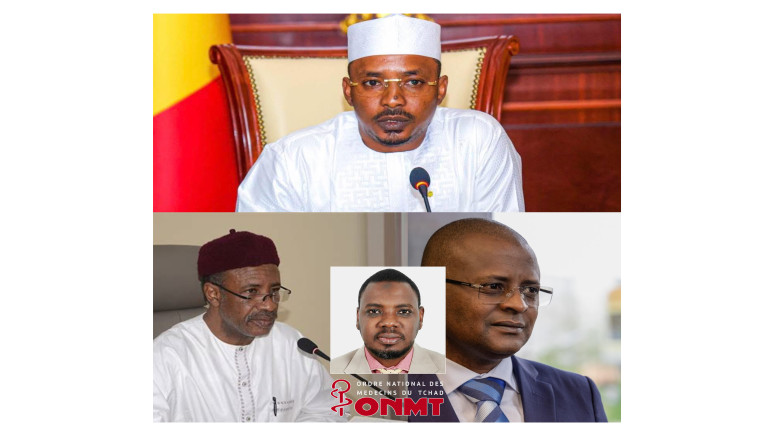
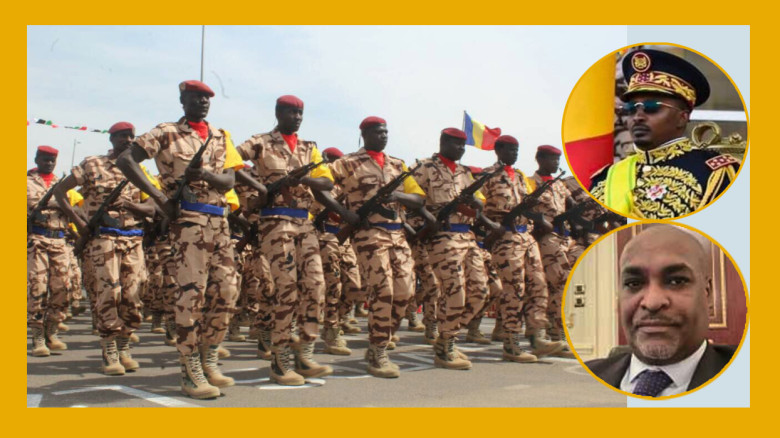
Image: The Chadian National Army; The President of the Republic of Chad, Marshal Mahamat Idriss Déby Itno
By: Joe Le Mutant – Charilogone Editorial Team
Chad is currently facing a deep, multifaceted, and persistent crisis, to the point where the word “dialogue” no longer carries any real meaning when used by those who promote it. While the government continues to brandish it as a political slogan, the reality on the ground shows that the minimum conditions for a sincere, inclusive, and credible dialogue are no longer present. This raises a central question: why is dialogue no longer a solution to the Chadian problem?
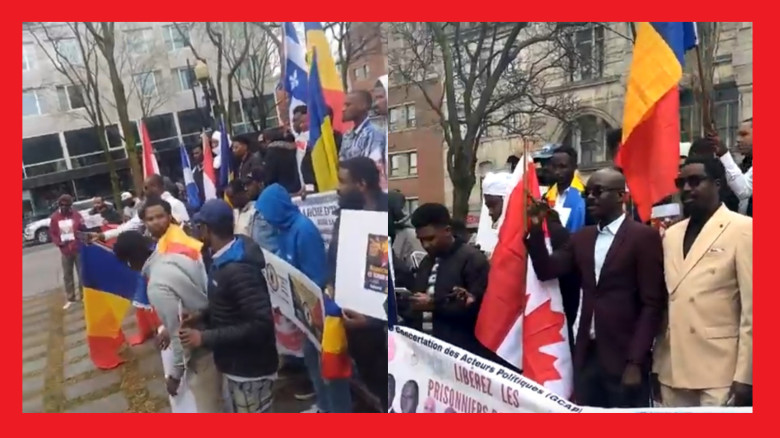
It is striking to see political parties — the same ones that participated in the DNIS — as well as certain religious leaders and traditional chiefs, calling once again for dialogue. Religious figures, traditionally seen as voices of wisdom, now seem to act more out of despair than conviction, as it is clear that such an appeal has no chance of influencing a government firmly entrenched in a logic of authoritarian continuity. While the “winners” of the transition consolidate their power, those who refused to participate in the DNIS are arrested and imprisoned on fabricated charges: Dr. Succès Masra, members of the GCAP, and Wakit Tamma, which cannot even meet to discuss the country’s future. In such a context, speaking of dialogue is almost provocative.
On the security front, the situation is equally alarming. The army, widely perceived as clan-based, is deployed to massacre civilians in Korbol, while in the East it refuses to disarm the Zakawa Totoboro fleeing Al-Fasher and attacking the Tama populations of Dar Tama. Arab–Hadjaray tensions continue to worsen without any meaningful intervention from the authorities. Community conflicts are no longer a priority, even as Boko Haram — an extremist group responsible for severe violence and human rights abuses — continues to kill civilians in the Lake region, where soldiers disguised in civilian clothing are buried in mass graves. This selective and inconsistent approach to security deepens the population’s sense of abandonment and injustice.
Chad’s diplomacy, once relatively clear, has become confused. It is no longer evident who Chad’s allies are and who its adversaries might be. Can France or Hungary truly be considered reliable partners capable of supporting the Chadian army? Can the United Arab Emirates — accused of financing the Sudanese conflict — genuinely be expected to support Chad amid an Iran–U.S. rivalry?Can ECOWAS, which has not even condemned recent jihadist attacks in Mali, realistically deploy troops to Chad? As for CEMAC, of which Chad is supposedly the military backbone, it has never sent a single contingent to support the Déby regimes. Even the Central African Republic, led by Touadéra, fears instability coming from its northern border, saturated with Chadian armed groups.
Given this bleak picture, it is difficult to believe that dialogue can resolve anything. The DNIS recommendations, though clearly outlined, are poorly implemented. The MPS, in power for 36 years, has never presented a convincing record. It has weakened institutions, dismantled the state, and lost the trust of the people. Justice, far from being independent, has become a tool of political repression. The eight-year prison sentence handed down to GCAP leaders is a glaring example: in Chad, any political leader can be arrested overnight, slapped with fabricated charges, and thrown into prison. This paints the picture of a country where justice no longer exists.
Under these conditions, the solution to the Chadian crisis can no longer be found in a dialogue emptied of substance. It may instead lie in a referendum on federalism — if Mahamat Kaka has the political courage to organize one. Federalism would offer a new institutional architecture, reduce the over-centralization of power, empower regions, and potentially ease community tensions. It is a serious proposal that deserves national debate.
In truth, Chad is heading toward disintegration if nothing is done. The country needs courageous action, an independent judiciary, a republican army, and leadership capable of uniting rather than dividing. As long as the government continues to use dialogue as a mere political slogan, without any real intention of addressing economic, security, and institutional problems, the country will remain trapped in a cycle of crises. The time for speeches is over; what Chad needs now are deep reforms and a complete reconstruction of the state.
By: Joe Le Mutant – Charilogone Editorial Team


.gif)


Leave A Comment