

























Khartoum Pays the Price of the Sins of Sudanese Political and Military Elites
By: Mohamed Ali El-Kilani, Director of the African Sahel ObservatoryWhen the latest war broke out in Sudan, the greatest shock was that Khartoum, the capital of the state, suddenly turned into a fierce battlefield between the army and the Rapid Support Forces—an unprecedented scene in Sudan’s contemporary political history. Khartoum, despite its fragility, had always symbolically represented sovereignty and relative stability. But this image completely collapsed when the city became an arena of open confrontation. Before the eyes of its inhabitants, all the symbols of the state were crushed, and the civilian space became a magnet for destruction—an implicit admission that Sudan had entered an unprecedented phase of structural collapse.
This transformation is the direct result of the breakdown of the architecture of power, built on a fragile balance between different military components. It was no longer possible to postpone the inevitable face-off between two forces competing for the center, each harboring deep suspicions about the other’s intentions. And since Khartoum housed the seats of command and sovereignty, controlling it appeared as the decisive battle to determine who would prevail. The city thus shifted from being a national capital to a strategic objective for two camps that no longer saw politics as a solution.
What made this battle even more dangerous is that Khartoum was neither geographically nor institutionally prepared to withstand such a war. It is a civilian city by nature, densely populated, with tangled neighborhoods and already weak infrastructure. It did not host military fronts in the classical sense. Its streets, markets, and hospitals were transformed into open-air theaters of operations. Civilians were no longer mere witnesses to violence; they became its direct fuel—fleeing their homes, used as human shields, or deprived of food, medicine, and water. The great city became a symbol of abandonment rather than prestige.
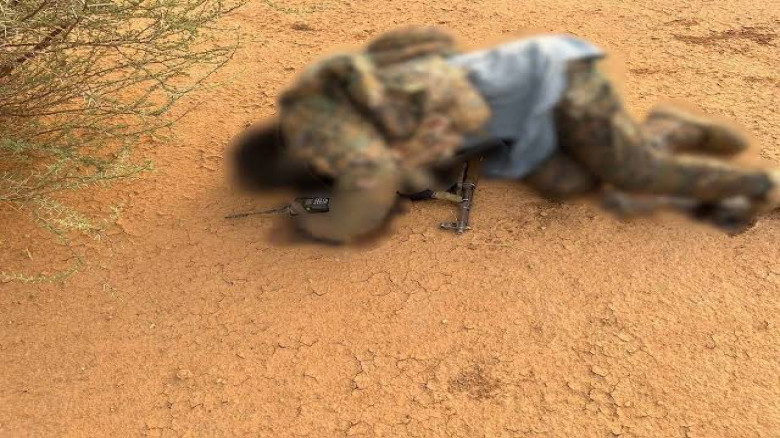
From the first days of the conflict, signs of total state collapse in the capital appeared. Government institutions ceased to function, the administrative apparatus was paralyzed, security vanished from the streets, and crime thrived in the vacuum. Health structures collapsed under the influx of wounded and the absence of doctors. Khartoum became a city living on its own ruins, filled with broken memories, weighed down by the smell of death, consumed by fear of the unknown. And all this unfolded under the gaze of the world, whose response did not go beyond weak diplomatic calls for a ceasefire.
This war in Khartoum differs from all previous wars in Sudan’s peripheries—not only by location, but by symbol and scope. For decades, Khartoum represented the political, economic, and media center of gravity. When war penetrated its heart, it struck at the symbolic core of the Sudanese state. It was as if it stripped legitimacy from the old elites who, for decades, exported crises to Sudan’s peripheries while claiming sovereignty at the center. This war declared that the central monopoly of power produced only total fragility, collapsing from the head of the state rather than its base. Political and military leaders fled eastward.
And since the capital, since independence, had been monopolized by elites who seized privileges—money, power, wealth—the war appeared to many marginalized groups as a kind of “history returning to its course.” Khartoum, which decided the fate of the regions without consulting them, itself became a field of violence. In this painful symbolic sense, the center of decision became the center of suffering. Yet this approach, despite its symbolic power, hides a greater tragedy: Khartoum is not only the capital of elites. It shelters millions of poor, displaced, and refugees who had fled the elites’ wars in the peripheries. The war caught up with them in the place they thought was their last refuge.
The battle of Khartoum thus turned into a war of attrition for the elites, making it one of the most chaotic and terrifying conflicts in the country’s history. A dangerous precedent that could redefine the shape of wars in Sudan in the future—from the peripheries to the center.
What is even more worrying is that the war in Khartoum reproduces all the defects accumulated by Sudan’s regime over decades: multiple centers of decision-making, absence of unified political leadership, proliferation of weapons, politicization of the military institution, collapse of public services, and ambiguity of legal legitimacy. All these elements converged in a single urban space to make Khartoum a miniature model of a “failed state,” or a “post-state Sudan,” if you will. A terrifying outcome that must not be treated as an exceptional accident, but read as the logical result of a long process of denial and exclusion.
The complexity is greater still because Khartoum is not only a political capital. It is a transport hub, a media center, the seat of diplomatic missions, and the area where most national infrastructure is concentrated. Destroying Khartoum therefore does not only mean overthrowing a government or subduing a faction. It means the collapse of the state in its essential function. This is what people live daily and what television channels broadcast, while no one has the capacity to change anything. Khartoum thus becomes not only a battlefield, but a test for all remaining chances of Sudan’s survival as a coherent political unit.
In the end, Khartoum, having become the arena of armed conflict, no longer represents the geographic or political center as before. It symbolizes the end of an entire era in Sudan’s modern history—an era built on centralized power, monopoly of decision-making, and marginalization of the peripheries, which exploded suddenly in the face of those who shaped it. The only lesson that can still be drawn is that Sudan’s reconstruction must begin by recognizing that Khartoum is not Sudan. And that a collapsing capital is, in reality, a homeland where justice has collapsed—not just infrastructure.
.jpg)
.gif)


Leave A Comment