



















Sudanese Army : The Impossible “Reconstruction” Amid Fragmentation and Competing Loyalties
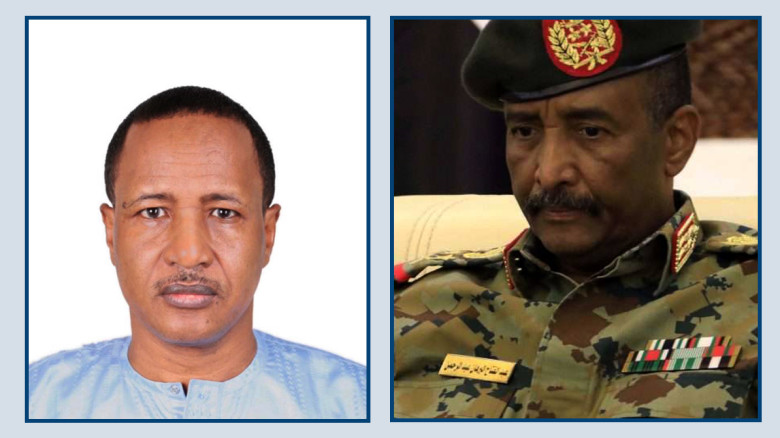
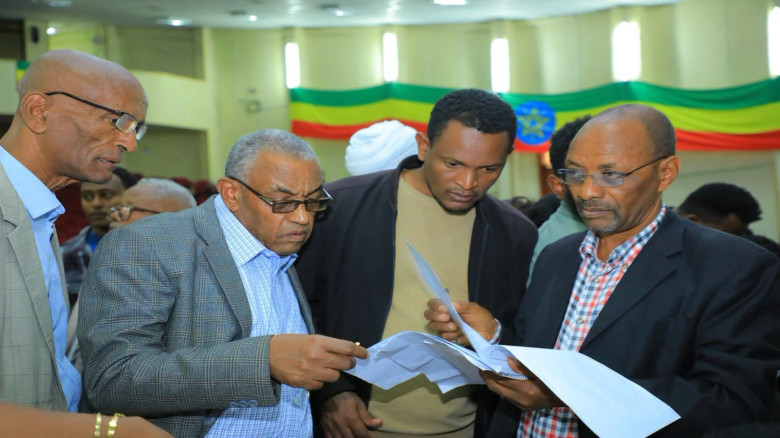
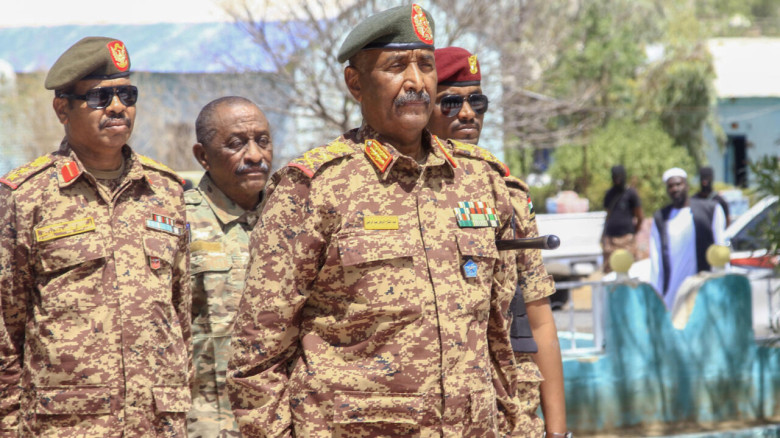
Image: General Al-Burhan, leader of the Sudanese transition, surrounded by his officers.By: Analysis Mahamat Ali Kalyani – Charilogone Editorial Team
The war tearing Sudan apart today has exposed the depth of the crisis undermining the military institution, long perceived as one of the last pillars of the state. In a country where more than a hundred armed groups proliferate, where alliances shift according to the balance of power, and where the regular army itself is accused of being infiltrated by competing ideological currents, the idea of “reconstructing the national army” appears less as a strategic project than as a political slogan. The following analysis highlights the internal contradictions, power struggles, and structural risks that make such reconstruction nearly impossible in the current context.
In a Sudanese landscape where more than a hundred armed groups coexist, and where the regular army has long been accused by political and military actors of being infiltrated by ideological factions, speaking of “rebuilding the national army” is more a political catchphrase than a realistic plan on the ground.
Current realities show that the military institution operates in a climate of mutual distrust among its various alliances. The current leadership, embodied by General Abdel Fattah al‑Burhan, initially enjoyed the support of Islamist factions at the beginning of the war. He later found himself at odds with some of these brigades, leading to arrests, legal actions, and a reduction of their influence. For many observers, this shift does not reflect a change in national doctrine but rather a strategy to manage power balances and prevent the rise of armed groups capable of directly threatening the center of power.
At the same time, al‑Burhan relies on units with tribal and regional roots and has reopened channels with former fighters and dissident groups under the slogan of “returning to the homeland.” According to analysts, this approach is less about reconciliation and more about anticipating new war scenarios that could later be rebranded.
The idea of integrating all these formations into the army faces a fundamental institutional obstacle. Bringing together armed groups with tribal, ideological, and divergent interests under a single structure risks turning the Sudanese army into a mere banner for competing loyalties, rather than a guarantor of national unity.
Hence the conclusion: one cannot assemble heterogeneous elements within a single body and expect that body to heal. Without addressing the root causes of politicization, clientelism, and narrow loyalties, integration risks spreading divisions at the heart of the institution instead of resolving them.
The consequence is clear: if the Sudanese army loses its unified national doctrine and becomes a mosaic of loyalties, it will cease to function as a coherent national institution. In that case, its crisis will no longer be merely military but could become the prelude to an existential crisis for the Sudanese state itself.
By: Analysis Mahamat Ali Kalyani – Charilogone Editorial Team

.gif)


Leave A Comment