
.jpg)

































Sudan – RSF deserters, between integration and reversal
Information presented as confirmed and cross‑checked with concordant sources indicates a worsening of the crisis linked to the management of Rapid Support Forces (RSF) deserters who joined the army. What initially appeared to be a media and military gain for the army is gradually turning into a potentially explosive security and financial problem.At the heart of this crisis are several factors: the alleged failure to respect financial commitments made to the deserter soldiers, accusations of corruption targeting certain intermediate commanders, and explicit threats of returning to the RSF with their equipment and military vehicles.
On the ground, several military and civilian sources report that deserters integrated into army formations are experiencing significant delays in receiving the financial allowances promised to them at the time of their defection. This situation fuels growing discontent among these fighters, who believe that the commitments made to them have not been honored.
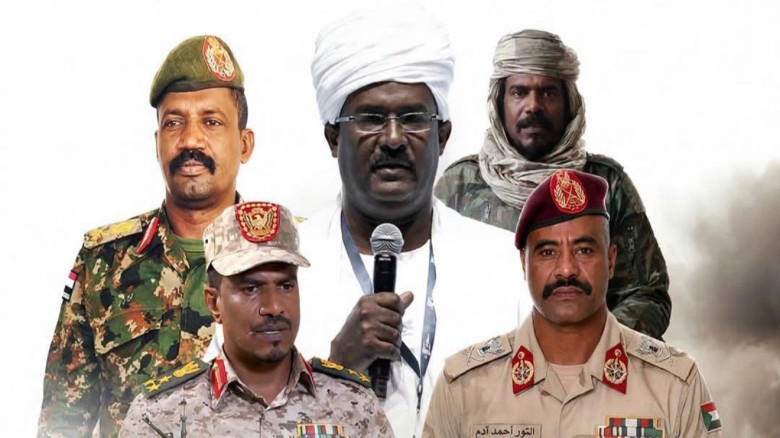
The case of deserter commander Al‑Nour Gouba, presented as one of the leading figures among the deserters, is a significant example of this tension. According to available information, his chief of staff reportedly conveyed directly, during a phone call, the widespread dissatisfaction of his fighters regarding what they consider a form of “neglect” of their case by the army command. He also reportedly warned that deploying his troops to the front lines under current conditions could push them to return to the RSF ranks with their military vehicles.
However, the discontent is not limited to Gouba’s group. It also concerns a larger number of soldiers who defected, some of whom directly accuse their field commanders of having received the funds intended for the fighters and appropriating them. These accusations arise in a context marked by a lack of transparency regarding the entity responsible for managing and distributing payments within the military structure.
This situation reveals a double operational risk. The threat of a return “with the vehicles” is particularly sensitive. These fighters have significant field experience and knowledge of the army’s movements, positions, and arrangements. A reverse defection could therefore result in a double loss for the army: on the one hand, the loss of human and material resources, and on the other, the risk of transmitting operational information to the adversary.
Alleged involvement in exfiltration operations in El‑Fasher
The same sources claim that some deserters received large sums in exchange for their participation in these operations. The cost of exfiltrating a single officer reportedly reached between 150 and 200 billion Sudanese pounds. These amounts, which require independent verification, illustrate the possible existence of a parallel financial system surrounding defection and exfiltration operations.
Among those allegedly exfiltrated are Youssef Sam, adviser to Minawi; the commander of the “Art Art” forces at the Zamzam camp; Mohi Al‑Dine Chouqar, head of the “Takayas” in El‑Fasher and security official of the Joint Force; and Abdel Rahman Adam Mohamed Mahmoud, head of Popular Security in El‑Fasher. Sources also mention the exfiltration of a large number of officers and soldiers belonging to the army and the Joint Force.
According to the same information, field investigations reportedly established the alleged involvement of General Al‑Nour Gouba and other actors in managing this network along the El‑Fasher and desert axes. The operations allegedly enabled the exit of more than 3,000 soldiers and officers of various ranks from El‑Fasher, passing through the areas of “Qarni,” “Hella Saleh,” and “Hella Cheikh,” toward Al‑Dabba.
Sources further claim that the network exploited the general amnesty decree attributed to RSF commander General Mohamed Hamdan Dagalo, allowing voluntary exit without prosecution. According to this version, this measure was used, in coordination with elements of military intelligence, to facilitate the exfiltration of officers sought by the RSF in exchange for financial payments.
If confirmed independently, these accusations would add another dimension to the current crisis: deserter networks would no longer be merely an issue of recruitment and military integration, but could also play a role in clandestine exfiltration operations of military and security personnel.
Legal accusations concerning Al‑Nour Gouba
Meanwhile, jurists cited in the available information question General Al‑Nour Gouba’s responsibility for violations allegedly committed in El‑Fasher when he was responsible for the El‑Fasher and North Darfur axis.
According to their analysis, certain violations were allegedly committed under the control or supervision of General Gouba, in coordination with the 6th Division’s military intelligence in El‑Fasher. The jurists invoke the principle of command responsibility, under which a superior can be held accountable when he knew or should have known of crimes committed by forces under his command and failed to take necessary measures to prevent or punish them.
The same jurists claim that networks operating inside and outside El‑Fasher were involved in killings, civilian assassinations, and looting. They believe that General Gouba’s responsibility could be sought for acts committed during his command period.
This interpretation is based notably on a publication attributed to the Sudanese army reporting direct contacts between General Gouba and state authorities since the beginning of the war and presenting his role as important in military operations. Jurists consider these elements as indications of coordination between Gouba and military intelligence. They also draw a parallel with the case of Abou Agla Keikel, presented as having previously collaborated with military intelligence in Al‑Jazira State and having been subject to international sanctions.
However, accusations concerning crimes committed in El‑Fasher, the scale of exfiltration operations, and Gouba’s personal responsibility remain allegations requiring independent evidence and a fact‑finding process. They must therefore be distinguished from the elements relating to deserters’ financial discontent, which is the central point of this analysis.
An administrative and institutional crisis
Another risk factor lies in the possible emergence of a true “defection market.” Despite growing discontent, some actors—particularly Safna, Al‑Nour Gouba, and Moussa Hilal—allegedly remain active in encouraging other RSF fighters to defect. Continuing this process could foster a system in which intermediaries profit from financial and status promises made to fighters wishing to join the army.
In this perspective, the deserter dossier could gradually become a real time bomb for the army and the intermediaries involved. If tensions persist, they could even evolve into internal confrontation between deserters, their commanders, and certain army components.
This crisis occurs at a particularly sensitive moment for the army, marked by intensified military operations on several fronts. The army needs additional human resources but must also face financial constraints, a liquidity crisis, and major logistical challenges. The absence of a unified strategy to integrate deserters into a coherent military, financial, and legal structure thus transforms individual promises into a double‑edged instrument.
Scenarios
In the most critical scenario, failure to respond to deserters’ demands, combined with their deployment to the fronts without prior resolution of their financial and administrative situation, could provoke new reverse defections. Some fighters could then return to the RSF ranks with their equipment and vehicles.
In an intermediate scenario, pressure from deserter soldiers on their commanders could lead to partial and delayed payment of their allowances. Such a measure would temporarily stabilize the situation without addressing the root causes of discontent. Accumulated frustrations could continue to weigh on relations between deserters and military command and resurface later.
Ultimately, the issue of dissatisfied deserters is no longer a simple statistical element in the army’s ranks. It now represents an important test of the command’s ability to manage highly sensitive human, financial, and security matters. The emergence of allegations concerning their involvement in exfiltration operations and accusations targeting some of their leaders further reinforces the security and political dimension of the dossier.
Failure to honor commitments made to these fighters could transform what was initially considered an advantage of the defection‑attraction strategy into a major vulnerability for the army’s cohesion and security.
Source: C.O.S.A.


.gif)

Leave A Comment