


.jpg)




























War in Lake Chad: The Chadian Army Confronted With Its Own Limits
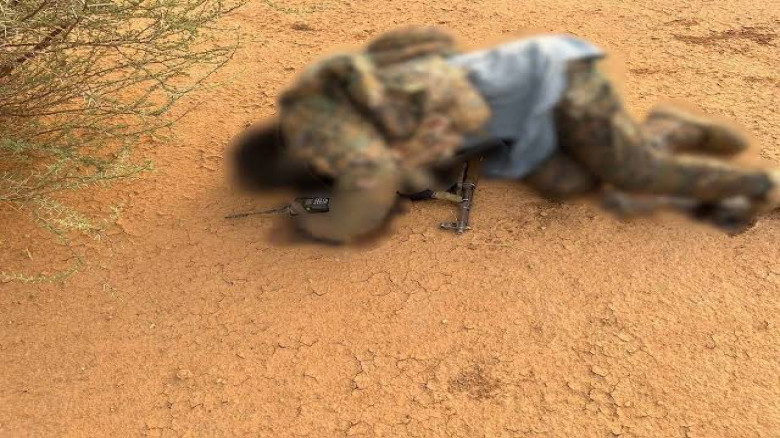
By: La Rédaction CharilogoneThe deadly attack carried out during the night of May 4 to 5, 2026, against a Chadian army position in Barka Tolorom has reignited concerns about the security situation in the Lake Chad region. Several soldiers lost their lives, others were seriously wounded and evacuated to N’Djamena, where Marshal Mahamat Idriss Déby Itno visited them to express his support. But beyond the immediate shock, one fact continues to haunt public opinion: the disappearance of General Mahamat Yacoub, whose body remains missing, now symbolizing the deep structural weaknesses of a military apparatus confronted with an enemy that knows the terrain far better.
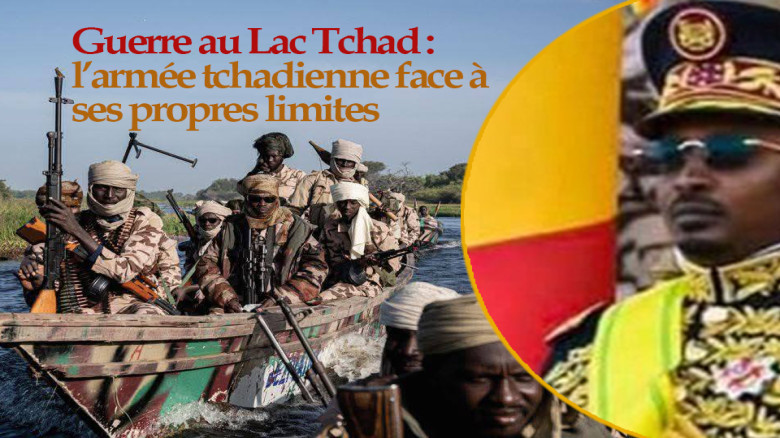
On social media, messages shared by residents of Dar Tama and other citizens denounce the State’s inability to recover the bodies of soldiers killed on the front lines. Some testimonies claim that families had to travel themselves to the combat zones to retrieve the remains of their loved ones — a situation described as a “sad reality,” revealing a serious failure in the army’s responsibility toward its own troops. Images and accounts from Lake Chad are equally alarming: soldiers navigating in makeshift canoes, sometimes without engines, others in small, poorly equipped boats, lacking helmets and bulletproof vests while conducting sweep operations against Boko Haram — a terrorist organization responsible for grave violence and human rights abuses. These scenes highlight a glaring lack of logistical means and protection, as well as a mismatch between troop training and the realities of the battlefield.
The attack on Barka Tolorom exposes a major strategic weakness: the Chadian army, historically trained to fight in desert and open terrain, is not prepared for the forested, marshy, and island environments of the Lake Chad basin. Boko Haram, on the other hand, knows these environments intimately, giving it a decisive tactical advantage. This situation underscores the urgent need to rethink military strategies, adapt troop training to these complex terrains, and modernize equipment with modern and technological warfare tools to reduce human losses.
In this already tense context, an audio message circulating online adds an explosive dimension to the crisis. According to the recording, a call is being made to all sons of Dar Tama serving in the army, as well as to all Chadian soldiers. The message urges them to take up their weapons and return home, claiming that “the army is not a clan affair” and that “the country does not belong to a single clan.” The missing general, originally from Dar Tama, is cited as a symbol of unacceptable abandonment. The audio accuses the army of making no effort to recover his body and alleges that some officers and generals fled the battlefield, leaving soldiers to fend for themselves.
The message goes even further: it calls on soldiers still deployed in the field to return home with their weapons — or to abandon them before rejoining their families. These calls, if confirmed, reveal a deep malaise within the ranks and a profound loss of trust in the military hierarchy and authorities. They reflect a climate of despair that goes far beyond operational challenges and now threatens the cohesion of the military institution itself.
In response to the surge in attacks, the government convened an extraordinary Council of Ministers and declared a twenty‑day state of emergency in the Lake province, including a curfew, movement restrictions, and reinforced military operations. Three days of national mourning were also declared in honor of the fallen soldiers. But among the public, one question persists: how can a national mourning period be declared when the bodies of some soldiers remain abandoned in the bush? For many, this contradiction empties the official mourning of its meaning and raises doubts about how the nation truly honors its defenders.
The disappearance of General Mahamat Yacoub, the precarious conditions in which soldiers operate, and the strategic failures revealed by the attack on Barka Tolorom highlight a reality that can no longer be ignored: Chad cannot continue waging a 21st‑century war with the means of the past century. Boko Haram remains an active and dangerous threat, but the real urgency now lies with the State: restoring trust, modernizing the army, protecting its soldiers, and fully assuming responsibility for those who fall for the nation. For a country that fails to honor its dead inevitably risks losing its living.
By: La Rédaction Charilogone — Copyright Charilogone



.gif)


Leave A Comment