



















Sudan - Special Report: Sudanese Army Chemical Program
Special Report | Documents Reveal a Sudanese Army Program to Produce and Use Chemical Weapons - Date: September 7, 2026Investigations published simultaneously by The New York Times and The Washington Post on September 5, 2026 reveal documents, images, videos, and internal communications suggesting that the Sudanese Armed Forces secretly developed, manufactured, tested, and stored chlorine‑based chemical munitions, and used them against the Rapid Support Forces (RSF) in populated areas.
1. Origin of the Documents
The newspaper says it obtained a file from a Middle Eastern intelligence agency describing how and why the Sudanese army developed the program over six months in 2024. The file contains around 150 documents, photos, videos, voice notes, and thousands of text messages taken from senior officers’ phones.
Washington Post
The Post reports receiving separate materials from Middle Eastern security officials, including Sudanese military documents, photos, videos, and messages exchanged between military leaders.
Both outlets note that some visual evidence was shared with U.S. intelligence and used in early 2025 to assess Sudan’s possession of chemical weapons.
2. Beginning of the Program & Supervising Entity
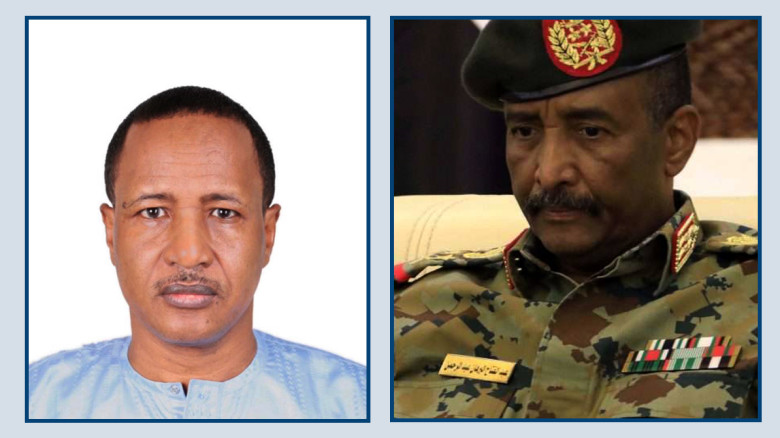
According to the NYT, in July 2024 Brig. Gen. Tariq Hussein, described as the head of the chlorine bomb project, proposed using chlorine to gain battlefield advantage and began overseeing prototype assembly.
Brig. Gen. Amir Idris, responsible for military drone operations, insisted on strict secrecy.
3. Munition Design
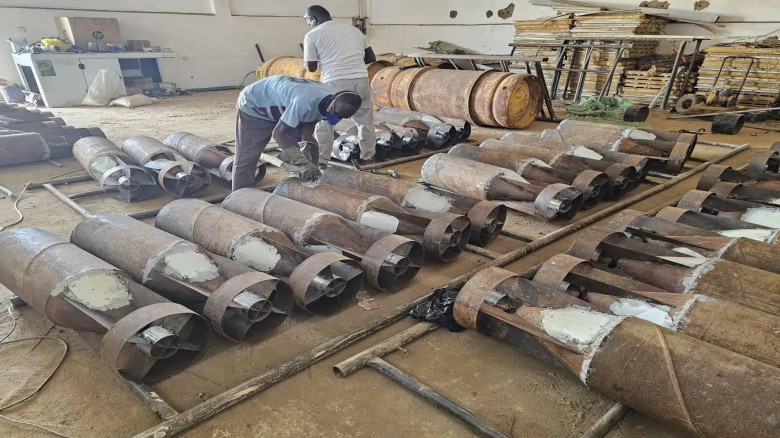
A bomb roughly 1.20 meters long containing about 15 kg of chlorine and 20 kg of explosives, with added metal balls to increase lethality.
A design combining an explosive charge with a chlorine reservoir to create both fragmentation and gas dispersion.
One document states the design aimed to conceal evidence of chemical‑agent use and improve gas spread.
Photos reviewed by the Post show dozens of such munitions stored in warehouse‑like facilities, made from modified metal tanks fitted with warheads, detonators, and fins.
A video shows the filling of these devices with liquid chlorine.
Other images show a munition rack installed inside an Antonov An‑32 aircraft used for barrel‑bomb drops, with a mechanism designed to move and release the bombs through the cargo door.
4. Tests and Technical Issues
The Post published additional test videos showing yellow vapor, a color experts associate with toxic chlorine.
The project faced leakage problems; Hussein reported dead insects, scorpions, and rats in a hangar, attributed to overnight chlorine exposure.
5. Chlorine Sources
Al‑Manara water station: A voice message from August 26, 2024 indicates chlorine was obtained from this water‑treatment facility in Omdurman.
Humanitarian aid:
ICRC supplied 30 cylinders to Al‑Manara in 2023.
CARE provided 35 between 2024 and 2025.
UNICEF supplied chlorine to six Khartoum water stations, including Al‑Manara, from 2023 to 2025.
UNICEF told the Post it had no records indicating diversion.
India: Tanks found at 2024 attack sites were linked by France 24 and C4ADS to an Indian supplier later sanctioned by the U.S.
6. Stockpile and Field Use
The Post cites messages indicating a stock of up to 290 bombs, and other correspondence suggesting hundreds were assembled at Merowe and 106 used.
Reported uses include:
Al‑Jaili refinery (September 2024): RSF fighters reportedly inhaled gas after an attack near Libya market. On September 13, RSF accused the army of firing toxic missiles at the refinery. Photos showed people using oxygen masks. The U.S. attributed several chlorine attacks to Sudan that month.
17 October 2024: A strike on a munitions factory causing heavy casualties.
December 2024: Gas reportedly used to force RSF snipers from elevated positions.
A video shows a person with severe skin burns attributed to a chemical attack.
7. Command Knowledge
The Post says forensic analysis confirmed recordings were attributable to al‑Burhan.
Documents show Madani sending photos of assembly sites and discussing specifications with officials including al‑Burhan.
In 2026, the U.S. Treasury sanctioned Madani for his role in military procurement and leadership of Target for Multi‑Activities, accused of importing explosives from Egyptian and Indian companies.
8. Cover‑Up Attempts & Investigation Commission
A September 2025 message attributed to Madani informed al‑Burhan that a base storing the weapons had been cleared.
Al‑Burhan announced a Sudanese investigative commission in May 2025.
A July document bearing his signature instructed that Madani be included due to his expertise, though sources described him as the program’s chief engineer.
The commission’s interim report claimed chemical traces had been removed. Sudan later stated that available evidence showed no chemical or radioactive contamination.
Army spokespeople declined comment. Sudanese officials had previously denied developing or using chemical weapons.
9. Legal and International Context
An OPCW spokesperson said several countries requested clarification.
The NYT reports the U.S. announced a second round of sanctions in June 2026, demanding Sudan destroy all chemical weapons and production facilities under international supervision.
10. Assessment of Evidence
They considered the documents highly credible but stressed the need for site access, witness interviews, and field inspections.
Experts reviewing NYT materials found them consistent with chemical‑weapons development and called for an international investigation inside Sudan.
Source Image: evidencenetwork.ca


.gif)


Leave A Comment