
.jpg)




















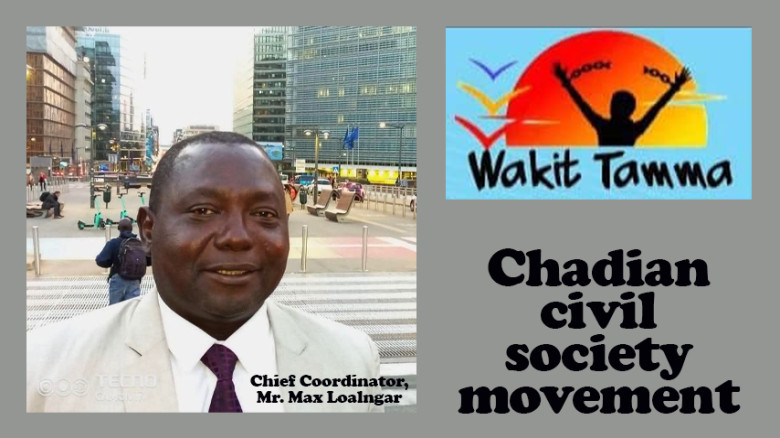
Wakit Tamma, an Unwavering Movement for Fundamental Freedoms in Chad
Photo: The chief coordinator of Wakit Tamma, Mr. Max Loalngar
By: Charilogone Editorial Team
Since its creation, Wakit Tamma has never deviated from its mission. The movement has established itself as a determined civic force, committed to denouncing the abuses and injustices reported by a segment of the Chadian population. Faced with perceived governance abuses and repeated violations of civic rights, Wakit Tamma has positioned itself as a bulwark, multiplying warnings and mobilizations. Its chief coordinator, Max Loalngar, has become one of its most emblematic figures. Forced to leave the country for security reasons according to those close to him, he continues his activism from exile, illustrating the pressures faced by certain civil society actors.
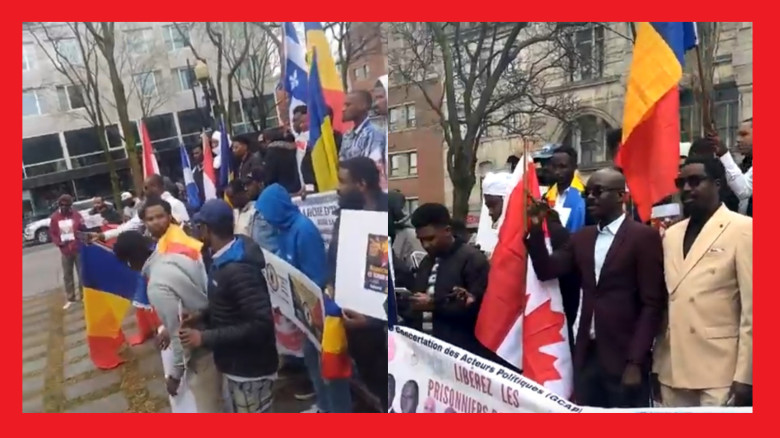
The movement bases its action on four fundamental freedoms that it considers non‑negotiable. Freedom of expression is the first pillar: Wakit Tamma believes it is essential to denounce injustice and counter what it describes as misinformation coming from the authorities. Freedom to protest is the second axis, despite repeated bans issued by the Ministry of Public Security. For the movement, the streets remain a legitimate space for expressing popular discontent in the face of a system it views as repressive. Freedom of association, the third principle, guarantees, according to the movement, that every citizen has the right to organize freely, without intimidation, throughout the country. Finally, freedom of petition allows citizens to appeal to national and international institutions when they believe serious human rights violations have occurred.
Since the death of Marshal Idriss Déby Itno in 2021, Wakit Tamma has multiplied its actions and public positions. The movement first rejected the military transition, which it considers contrary to constitutional order. Several of its demonstrations were violently dispersed, an approach its leaders describe as severe repression. Wakit Tamma also refused to participate in the National Inclusive and Sovereign Dialogue, arguing that the conditions for a genuinely open dialogue were not met.
In the same dynamic, the movement issued several calls for boycott. It rejected the constitutional referendum, which it claims was marked by extremely low turnout. It also called for a boycott of the presidential election, asserting that no political candidate had access to complete polling records. The legislative elections were denounced as marred by irregularities, while the municipal elections were described by the movement as a process that favored elites close to the authorities.

A defining moment in Wakit Tamma’s mobilization remains the May 14, 2022 march, organized against what the movement described as “French policy in Chad.” This demonstration, which gathered many participants, became a symbolic turning point. According to activists, it contributed to redefining France’s presence in the country and “sealed the fate” of that relationship, in their own words.
At the same time, Wakit Tamma advocated for a “Peace of the Braves,” calling for a comprehensive agreement that includes politico‑military groups and political parties excluded from the DNIS, arguing that no lasting stability is possible without a genuinely expanded dialogue. The movement also claims to have submitted to the International Criminal Court documented files alleging violence and extrajudicial killings attributed to security forces under the command of Marshal Mahamat Idriss Déby Itno. These elements reflect the movement’s accusations, and their assessment falls under international judicial mechanisms.
Another tragic episode remains vivid in public memory: the death of Yaya Dillo, president of the Socialist Party Without Borders and a member of the Wakit Tamma coordination. He died under disputed circumstances, sparking strong reactions. His family accuses President Mahamat Idriss Déby Itno of involvement in the event—allegations that reflect their position and remain the subject of public debate.
For its members, this struggle continues the legacy of Soumaine Adoum, an emblematic figure of civic resistance in Chad. According to them, this legacy carries a moral responsibility: to defend fundamental rights, protect vulnerable populations, and keep alive the pursuit of social justice. Wakit Tamma thus presents itself as the voice of the voiceless, determined to make heard the deep aspirations of a segment of the Chadian people.



.gif)
Leave A Comment