
.jpg)

















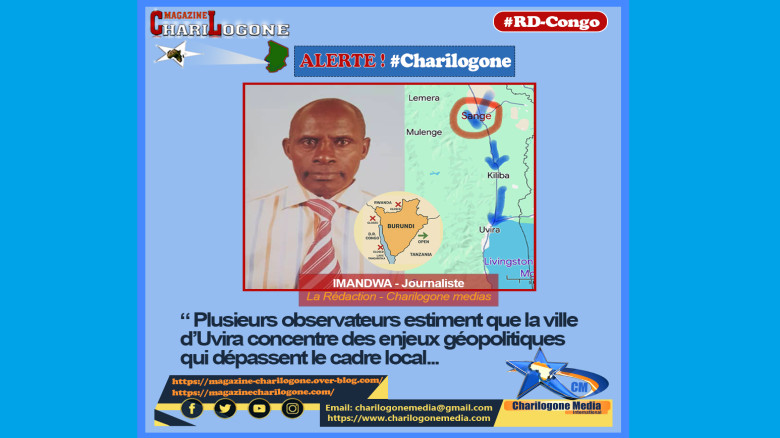
Uvira: Wounds Since Lumumba
Uvira: Tumultuous Recriminations of a Wounded Population Since the Death of Congolese Hero Emery Patrice LumumbaIMANDWA, Kigali, December 18, 2025
Editorial Board, Charilogone Médias - Translate from French to English.
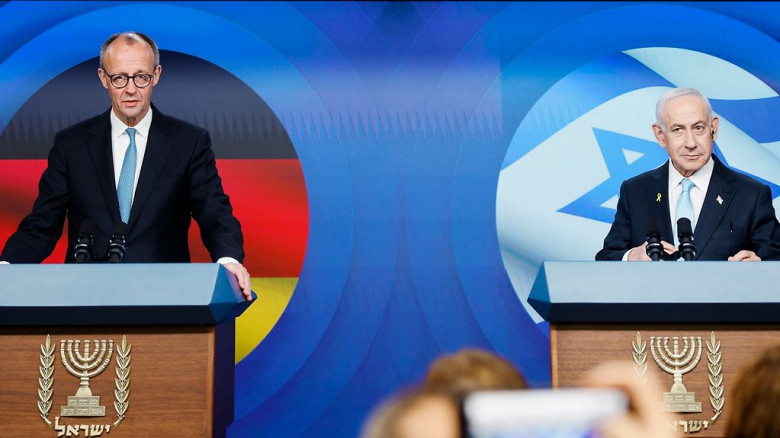
As if rushing to the rescue of someone not yet clearly identified, U.S. President Trump—recent initiator of the partial Washington peace accords between the DRC and Rwanda, meant to be completed by direct negotiations between the belligerents in the East (the rebels and Kinshasa)—ordered the rebels to withdraw immediately from the city. In apparent compliance, this withdrawal was unilaterally announced during the night of December 15–16.
It should not be forgotten that the embryo of a more lasting peace in eastern DRC—especially along the common border with Rwanda—could only be born after the signing and implementation of the Doha Accords in Qatar. These accords, considered both the brain and the heart preventing the initial institution from falling into diplomatic coma, required the effective and almost compelled engagement of the true belligerents on the ground. Yet many observers wonder why Uvira interests the U.S. president so much.
The history of Uvira and its strategic position provide some insight:
We are only a few months after the proclamation of independence of the DRC on June 30, 1960. The hero Emery Patrice Lumumba, who fought to wrest sovereignty from Belgian colonizers—who had intended to grant it only thirty years later, in 1990—was dissolved in a barrel of sulfuric acid (H₂SO₄) in Katanga. It is said, and plausibly so, that the very first Prime Minister was betrayed by his own, themselves bought off by two or three Western capitalist powers. As if to kill a dog by first giving it a bad name, Lumumba was accused of being communist or socialist…
The Lumumbist rebellion, known as the Mulelist movement, was born immediately in Kwilu, Bandundu, near Kinshasa, to protest the assassination of the leader of independent Congo. The presumed culprits, the corrupt conspirators, are well known. They live gilded lives… Only the silence of the dead has covered this crime until now. It is no secret to anyone who loves Congo and Africa.
The Mulelists arrived in Uvira via Bujumbura…
The East boiled during this first war, during which the rebels fired at Mobutu, whose beret alone flew off at Kamanyola. This was during their advance toward Bukavu, then capital of the former Kivu. It is said he had “come looking for the stick to be beaten with,” where improvised Banyamulenge fighters shielded him with a human bulletproof shell.
Before targeting other parts of the country, rebel leader Pierre Mulele had decided to cross the Congo River at Léopoldville/Kinshasa, take a plane from Brazzaville, and land in Bujumbura in order to enter Uvira. With his men, he crossed the Gatumba border as if it were a mere stream.
Uvira thus became the starting point of the Mulelist war in the former Kivu and in the Eastern Province (Kisangani).
The Mulelists, who entered Uvira without combat, began their advance toward Bukavu, a city that would have fallen as well had it not been for the personal intervention of the Chief of Staff of the national army (ANC), Lieutenant-Colonel Joseph Désiré Mobutu. Landing at Goma airport, he went to Bukavu and then continued toward Uvira, passing through Nyangezi and Ngomo (a route recently taken by M23) until reaching Kamanyola, the northern tip of the Ruzizi plain. There, he narrowly escaped a Mulelist bullet that only knocked off his beret. The Kamanyola monument still bears witness to this episode of war.
Why Should the M23/AFC Withdraw from the City of Uvira, Where the AFDL Was Once Organized and Drove Mobutu Out Seven Months Later?
A key indicator was the meeting Mobutu organized in Bukavu in September 1974, bringing together heads of state and rebel movements from Angola, Namibia, Rhodesia, as well as anti-apartheid activists. This meeting was widely publicized across the world. Who could have succeeded in such an endeavor without the approval of the major capitalist powers?
Why should another meeting of this kind not be organized in the region, so that President Trump (or his local partner) might impose a definitive ceasefire and a consequential peace—just as Lumumba did in Brussels when he demanded immediate independence in the face of those who promised it only for 1990?
Illusion or chimera? Peace in eastern DRC and the Great Lakes region has already known its prophet of doom: Mobutu, who presented himself as the sole guarantor of Zaire’s stability, while amassing a billion dollars and declaring: “After me, there will be chaos.”
It is said that Mobutu was a pawn serving capitalism in Africa. The AFDL, which began in Uvira in 1996, was labeled a “Rwandan betrayal” before being inscribed in the momentum of the Berlin Wall’s collapse.
Who will save the population of Uvira from the cycle of war?
The Burundian army, neighboring Uvira, entered Congo through this city to pursue the dismantling of Burundian rebels known as RED TABARA, active in the surrounding areas. They are said to be lurking around the Banyamulenge in the highlands of Uvira.
The Burundian army reached North Kivu when the East African Community (EAC) was called upon by Kinshasa to ensure a ceasefire with the M23, still in Bunagana after its forced repatriation from Uganda, where it had retreated following the destruction of Cyanzu by the Tanzanian army in 2013. The Burundian contingent arrived alongside the Kenyan one—Rwanda having been excluded from the process.
It is remembered that Kinshasa sought to modify the mission of the EAC contingent so that it would fight the M23, but Kenya opposed this out of respect for the mandate, which led to its declaration as persona non grata in North Kivu before its departure. Burundi, however, remained in North Kivu, signed other interstate agreements with Kinshasa, and deployed its militias there, notably the Imbonerakure.
The violence against Congolese Tutsis in Kalima, Uvira, Kisangani… The assassinations, lynchings, and arbitrary arrests of some 700 people now imprisoned in Kinshasa—including the honorable deputy Mwangacucu—are the undeniable result of a hate speech launched by the vice-governor of South Kivu, Lwabanji Lwasi Ngabo. He ordered the Banyamulenge to “return to Rwanda” to escape the carnage. Is this the future of Uvira after the departure of the M23/AFC?
In this racist logic born from the highlands of Uvira, the FARDC–Wazalendo–FDLR coalition, supported by the Burundian army and the Imbonerakure, massacres civilians perceived as Tutsis, slaughters their cattle in the pastures of Masisi and Rutshuru, loots their property, and rapes women…
Might President Trump Be Thinking of the Banyamulenge Threatened with Genocidal Extermination Around Uvira?
The Banyamulenge of the Uvira highlands are the target of repeated massacres. Their leaders have lobbied courts, tribunals, and human rights organizations, but without success. They created a self-defense organization, TWIRWANEHO, which recently allied with the M23/AFC after the death of their commander Makanika, killed by a drone launched from Bujumbura, according to observers and victims.
The recent speech of the Congolese head of state, promising a military government whose mission would be “to erase the Banyamulenge,” leaves no doubt: genocide begins with thought, spreads through speech, and is then planned and executed.
Who will protect the Banyamulenge from the genocidal danger orchestrated by the Burundian air force (Sukhoi jets, helicopters, drones, infantry encirclement)?
Border Cities and Airports in the Great Lakes: A Theater of War Par Excellence
Considering that the cities of Brazzaville and Kinshasa, Bujumbura and Uvira have served to export and import the scourge of war into Kivu, via Uvira;
Considering that Goma International Airport is separated from Rubavu airfield in Rwanda by less than one kilometer, almost exactly like Kavumu Airport in Bukavu and Kamembe Airport in Rwanda;
Considering that recently, Rwandan airspace was violated by a Congolese Sukhoi jet that briefly landed in Rubavu—an act perceived as provocation, intimidation, and internationalization of the Congolese conflict;
Considering that in eastern DRC, the only airport from which drones depart to massacre Banyamulenge civilians—after the bombing of military leader Makanika—is Bujumbura Airport, facing Uvira;
Considering that in 1967, Belgian mercenary Jean Schramm occupied Bukavu, cut off from the rest of the DRC for three months. He could not escape the ANC (Congolese National Army), which had shot down the plane supplying him via Kamembe Airport in Rwanda, across the Ruzizi. The wreckage of this Belgian aircraft is still visible at Camp Saïo in Bukavu.
Historical Parallels: Mission Turquoise and the Seeds of Cyclical Wars
Bunagana, Uvira, and the Escalation of Conflict
One may wonder why President Trump waited almost a year, during which the M23/AFC advanced toward South Kivu, to intervene only after the capture of Uvira.
Was it because Bukavu, bordering Rwanda, was left in rebel hands after February 16, 2025?
Or was it because the port of Kalundu, located on Lake Tanganyika in Uvira, connects to the ports of Kigoma in Tanzania and those of Kalemie and Moba in DRC? One must not forget that through Lake Tanganyika, one reaches Zambia and thus the copper belt of Katanga—one of the world’s largest reserves of uranium and strategic minerals—which the United States intends to transport to the Atlantic coast, to Angola’s port of Lobito, via the recently renovated railway, inaugurated with great pomp by President Joe Biden.
In Cauda Venenum
“In cauda venenum”—“the venom is in the tail,” say the Latinists. Could Uvira be the southern tail of eastern DRC? For whom?
Doha must prepare its anti-venom serum before addressing the question of Uvira, observers warn.
IMANDWA, Kigali, December 18, 2025
Editorial Board, Charilogone Médias
.gif)


Leave A Comment