
.jpg)

















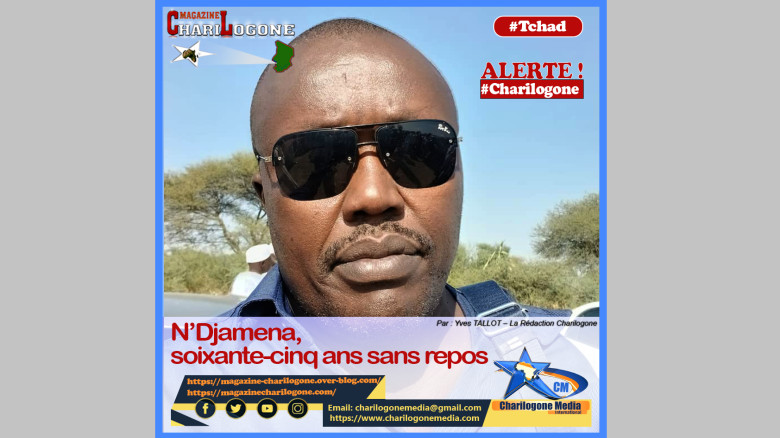
N’Djamena, Sixty-Five Years Without Rest
By: Yves TALLOT – Charilogone Editorial TeamLiving through war in N’Djamena… What an adventure, when you survive it — and with hindsight, it ends up making you laugh more than cry.
Our childhood memories haunt our sleep twenty, thirty, forty, even sixty years later.
Living in Sabangali, not far from the villa of Ngarta Tombalbaye’s Chief of Staff and the two‑storey house of his wife, on April 13, 1975, we had heard gunfire the night before. The next morning, I saw my mother crying, devastated: Ngarta had just been killed. Our father was arrested almost before our eyes and taken to the CSM prison, the Superior Military Council. According to testimonies gathered here and there, that coup d’État caused no more than ten deaths.
In 1978, while Hissein Habré was housed in the same two‑storey villa belonging to Ngarta Tombalbaye’s wife, along with his small group of rebels, they launched hostilities. At Félix Éboué High School, on Monday, February 12, 1979, a major war broke out, during which part of my family was taken prisoner by Hissein Habré, then released — not to say exchanged — in 1980.
We fled N’Djamena and ended up in Moyen-Chari, like so many others escaping the capital.
In 1982, Hissein Habré’s troops took the South, Sarh, the city of the Codos. There was chaos, but we remained in that city until 1988–1989.
Then we returned to resume our peaceful life in Sabangali.
In 1990, while a fratricidal war between the Gorane and the Zaghawa raged in eastern Chad, we woke up on December 1st to learn that Hissein Habré had fled to Cameroon, leaving the capital without a president for nearly two weeks.
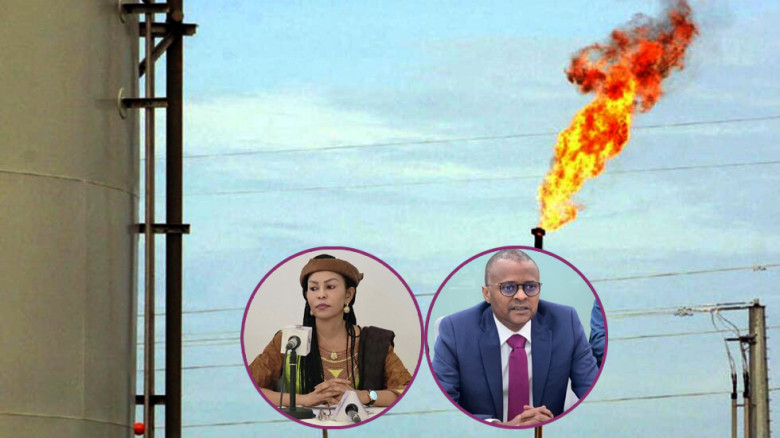
From 1990 to 2006 and again in 2008, rebels coming from the East — first with Captain Mahamat Nour, then with Tom, Timane, and Nouri — shook the capital: looting, killings, mass flight. But French presidents, active supporters of Idriss Déby Itno, defeated the rebels. The oil money from Doba, which began flowing in 2002, allowed the Marshal to maintain his power until 2021.
A dissident rebellion attacked again, but for once, there was no looting in N’Djamena. The reason: the attack coincided with the announcement of the ongoing presidential election results.
The CMT, the Transitional Military Council, with Macron’s blessing, chose to anoint the Marshal’s son and turn him into another Marshal, under the powerless gaze of the Chadian people.
After all, this city is called “N’Djamena,” which means “let us rest” in its Arabic etymology.
The ironic part of the story is that every time there has been turmoil in N’Djamena, there has been looting: civilians, administrative offices, gas stations, public parking lots, Chinese construction companies (iron and cement)… And many deaths.
The most amusing part is that in 2008, when all of N’Djamena was convinced that the Marshal‑father had been defeated, some people — after stealing sofas, tables, office computers, and even the suits of our dear Prime Minister Kassiré Delwa Koumakoye Imam — were ordered to return them by dropping them at the street corner after nightfall.
Imagine the scene…
All of this lasted, quite ordinarily, sixty‑five years, with its procession of fugitives and returnees.
No rest in N’Djamena.
The Fifth Republic, the so‑called refoundation, forgot to break the curse — the war and the deaths.
They thought of everything except the stubborn demons tied to the name of N’Djamena, which are still there.
Change the name of this city, for God’s sake, otherwise…
What name would you choose to rename N’Djamena?
We will flee again, my friends — and how funny it is. Funny to see the people of N’Djamena living in conditions worse than those of the children of Israel, who suffered only forty years before entering the Promised Land.
“Djaréna” (Run in local tchadian arabic) would sound better, I think.
By: Yves TALLOT – Charilogone Editorial Team
.gif)


Leave A Comment