



.jpg)


















Riyadh Faces Criticism: A Region Under Tension, According to Mohamed Ali Al‑Kilani
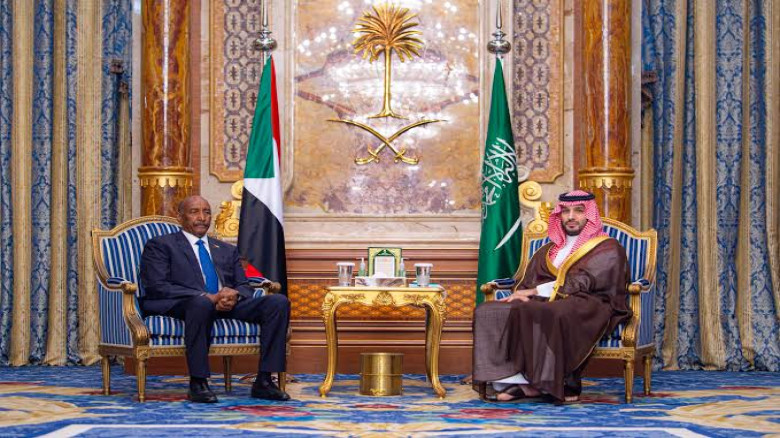
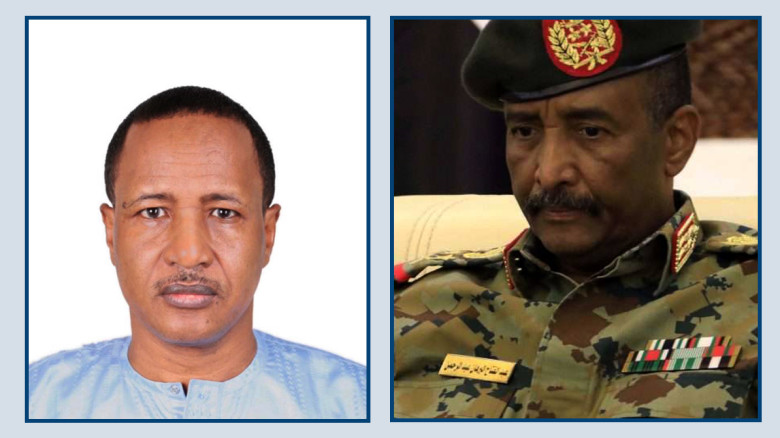
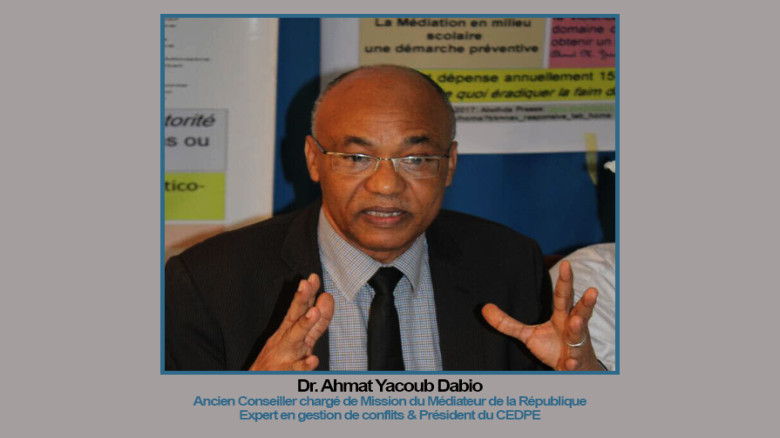
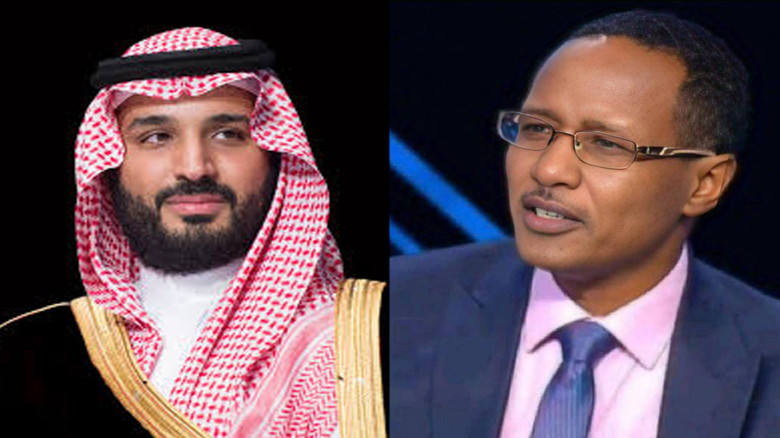
Illustration photo: Prince Mohammed bin Salman (Saudi Arabia) on the left, and journalist Mohamed Ali Al‑Kilani, Director of the African Center for Conflict Monitoring in the Sahel.
By Mohamed Ali Al‑Kilani, Director of the African Center for Conflict Monitoring in the Sahel – Charilogone Editorial Team
Journalist and researcher in security and political affairs, Mohamed Ali Al‑Kilani, Director of the African Center for Conflict Monitoring in the Sahel, stated that the accusations recently made by Saudi Arabia against the Rapid Support Forces — accusing them of targeting the Al‑Kuwaik military hospital, a humanitarian convoy of the World Food Programme, and a bus carrying unarmed civilians — fall within a complex regional and international context, reflecting what he describes as “a state of political and security confusion in Riyadh.”
Al‑Kilani explained, in an exclusive statement to Sudaniya News, that Saudi Arabia has recently begun to realize that several international reports point to its support for the Sudanese army under the guise of humanitarian aid. He noted that humanitarian supplies were found in the possession of army soldiers on several battlefields, placing the kingdom under increased scrutiny from the international community.
He added that the withdrawal of the United Arab Emirates from the war in Yemen has left Saudi Arabia facing difficult choices, including a scenario of Yemen’s partition in line with the demands of the southern population — especially in light of positive signals sent by U.S. President Donald Trump to southern leaders — or the risk of sliding into a new civil war along its southern border, opening the door to the public resurgence of jihadist groups, in addition to rising tensions with Iran.
Al‑Kilani indicated that these challenges have turned Saudi Arabia — in his words — into a “wounded lion,” seeking to export tension and reassert its presence in regional and international affairs, despite American and Israeli warnings delivered to the Saudi Minister of Defense during his recent visit to the United States regarding the consequences of escalating sensitive regional issues.
In the same context, Al‑Kilani stated that international sources indicate that the chemical weapons used in Sudan passed through Saudi territory with Riyadh’s knowledge, which — according to him — led to a decline in the kingdom’s role within the international Quartet mechanism, relegating it to a marginal position similar to that of Egypt, whose influence has diminished following reports that drones launched from its territory targeted areas in Darfur and Kordofan.
He continued, noting that recent leaks point to a clear marginalization of both Saudi Arabia and Egypt, illustrated by their absence from the humanitarian conference held in the United States. This absence reflects the shrinking of their roles as influential actors in resolving the Sudanese crisis, and their transformation — according to specialized international reports — into parties effectively involved in the conflict.
Al‑Kilani believes that Trump’s call to shift the initiative from the Quartet framework to an American and international framework irritated both Riyadh and Cairo, prompting Saudi Arabia — in his analysis — to try to contain this discomfort through more aggressive statements, the most notable being the description of attacks attributed to the Rapid Support Forces as “criminal.”
He added that the humanitarian convoys targeted near the city of Al‑Obeid, which sparked significant media controversy, were — according to his information — carrying Saudi food supplies and weapons intended to support the army and military units in the Kordofan region.
Al‑Kilani concluded by stating that Saudi Arabia is currently experiencing contradictions and anxieties in its handling of the Sudanese and Yemeni crises, ignoring — in his view — the role played by the Rapid Support Forces in protecting Saudi territory from Houthi attacks for more than ten years, an omission he considers a “political ingratitude” toward a force that directly contributed to the kingdom’s security.


Leave A Comment